Irresistible Soy Glazed Bok Choy Ready in 15 Minutes
|
Getting your Trinity Audio player ready...
|
Last Tuesday, I watched my youngest daughter, Sofia, wrinkle her nose at the bright green bok choy sitting on her plate. “Just try it,” I coaxed, knowing that this soy glazed bok choy would change her mind. One bite later, her eyes lit up.
“Mom, this is actually amazing!” she declared, reaching for seconds. That’s the magic of this recipe, it transforms simple vegetables into something irresistible, even for skeptical teenagers.
Mateo and I developed this soy glazed bok choy recipe together in our kitchen, combining his professional techniques with my desire for quick, weeknight-friendly meals. The glossy, savory-sweet glaze clings to each tender leaf, creating layers of flavor that make this humble vegetable the star of any meal. Whether you’re new to cooking Asian vegetables or a seasoned home chef, this recipe delivers restaurant-quality results in less than 15 minutes.
Bok choy has become a staple in our household, especially since discovering how beautifully it absorbs the umami-rich soy glaze. The contrast between the crisp white stems and silky green leaves creates wonderful texture, while the sauce brings everything together with notes of garlic, ginger, and just a hint of sweetness. This soy glazed bok choy works perfectly as a side dish or light main course when served over rice.
Why You’ll Love This Soy Glazed Bok Choy
This soy glazed bok choy recipe has earned its permanent place in our weekly rotation for several compelling reasons. First, it’s incredibly fast. From start to finish, you’ll spend just 12 minutes creating a dish that looks and tastes like you ordered takeout from your favorite restaurant. Busy weeknights call for recipes like this one.
Moreover, this recipe requires minimal ingredients, most of which you probably already have in your pantry. The glaze comes together with simple staples like soy sauce, garlic, and sesame oil, yet delivers complex, layered flavors that taste anything but simple. It’s proof that you don’t need exotic ingredients to create something special.
Additionally, this soy glazed bok choy is incredibly versatile. Serve it alongside grilled salmon, roasted chicken, or stir-fried tofu. The mild, slightly sweet flavor profile complements virtually any protein. My 19-year-old, Emma, even eats it straight from the pan as a light lunch, proving its standalone appeal.
Furthermore, bok choy is nutritional powerhouse packed with vitamins A, C, and K, plus calcium and fiber. This means you’re feeding your family something genuinely nourishing while satisfying their taste buds. The soy glaze adds minimal calories while maximizing flavor, a win-win situation.
Ingredients You’ll Need
Gathering your ingredients before cooking makes this soy glazed bok choy come together seamlessly. Here’s everything you’ll need for this delicious recipe:
| Ingredient | Amount |
|---|---|
| Baby bok choy | 1 pound (about 4-5 heads) |
| Soy sauce (low sodium preferred) | 3 tablespoons |
| Sesame oil | 1 tablespoon |
| Vegetable or avocado oil | 2 tablespoons |
| Garlic, minced | 4 cloves |
| Fresh ginger, grated | 1 tablespoon |
| Honey or brown sugar | 1 tablespoon |
| Rice vinegar | 1 teaspoon |
| Red pepper flakes (optional) | 1/4 teaspoon |
| Sesame seeds for garnish | 1 teaspoon |
When selecting bok choy, look for crisp white stems and vibrant green leaves without any browning or wilting. Baby bok choy works best for this soy glazed bok choy recipe because it cooks quickly and presents beautifully on the plate. However, regular bok choy works wonderfully too, just cut it into quarters lengthwise.
Substitutions & Variations
This soy glazed bok choy adapts beautifully to whatever you have on hand. If you don’t have baby bok choy, use regular bok choy, napa cabbage, or even Swiss chard. The cooking time might vary slightly, but the glaze works wonderfully with all these greens.
For a gluten-free version of this soy glazed bok choy, simply swap regular soy sauce for tamari or coconut aminos. Both alternatives provide that essential umami flavor without the gluten. Coconut aminos also add a slightly sweeter note that some families prefer.
Want more heat? Double the red pepper flakes or add a drizzle of chili oil right before serving. Mateo often makes a spicy version of this soy glazed bok choy for himself, leaving mine mild for the girls. Conversely, omit the pepper flakes entirely for a kid-friendly version.
You can also experiment with the sweetener in your soy glazed bok choy glaze. Maple syrup, agave nectar, or even a splash of orange juice create interesting flavor variations. Each brings its own character while maintaining that essential sweet-savory balance.
Step-by-Step Instructions
Creating perfect soy glazed bok choy requires just a few simple steps. Follow along, and you’ll have a restaurant-worthy dish in minutes.
Step 1: Rinse the baby bok choy thoroughly under cold water, paying special attention to the base where dirt often hides. Pat completely dry with paper towels or a clean kitchen towel. Moisture is the enemy of proper browning, so this step matters.
Step 2: Slice each bok choy head in half lengthwise, keeping the stem intact so the leaves stay together. This presentation style makes your soy glazed bok choy look professional and allows for even cooking.
Step 3: Whisk together the soy sauce, sesame oil, honey, rice vinegar, and red pepper flakes in a small bowl. Set this glaze aside while you prepare the bok choy. Having everything ready streamlines the cooking process significantly.
Step 4: Heat the vegetable oil in a large skillet or wok over medium-high heat. Wait until the oil shimmers but doesn’t smoke. This indicates the perfect temperature for searing your soy glazed bok choy.
Step 5: Place the bok choy cut-side down in the hot pan, working in batches if necessary to avoid crowding. Let them sear undisturbed for 2-3 minutes until golden brown. Resist the urge to move them around, patience creates that beautiful caramelization.
Step 6: Flip the bok choy and add the minced garlic and grated ginger to the pan. Cook for another minute, letting those aromatics bloom and perfume your kitchen. The smell alone will bring family members running.
Step 7: Pour the prepared glaze over the bok choy, tossing gently to coat each piece. Cook for 2-3 more minutes, allowing the sauce to reduce and become glossy. The leaves should be wilted but still bright green, while the stems remain tender-crisp.
Step 8: Transfer your beautiful soy glazed bok choy to a serving platter and sprinkle with sesame seeds. Serve immediately while hot and glistening with that gorgeous glaze.
Pro Tips for Success
After making this soy glazed bok choy dozens of times, Mateo and I have learned some tricks that guarantee perfect results every time. First, don’t skip the drying step. Wet bok choy steams instead of sears, and you’ll miss out on that delicious caramelized flavor.
Second, use a pan large enough to give each bok choy half plenty of space. Overcrowding drops the pan temperature, leading to soggy, steamed vegetables instead of the crispy, glazed perfection you’re aiming for. Cook in batches if needed, it’s worth the extra minute.
Third, prepare all your ingredients before heating the pan. This soy glazed bok choy cooks so quickly that you won’t have time to chop garlic or mix the sauce once you start. This French concept of “mise en place” makes cooking stress-free and enjoyable.
Additionally, watch the garlic carefully. It burns easily and turns bitter quickly. Add it after flipping the bok choy, not at the beginning, to prevent burning. This timing ensures fragrant, golden garlic that enhances rather than overpowers your soy glazed bok choy.
Finally, taste and adjust the glaze before serving. Some soy sauces are saltier than others, so you might need a touch more honey or a squeeze of fresh lime juice to balance the flavors perfectly. Trust your palate.
Storage & Reheating Tips
While this soy glazed bok choy tastes best fresh from the pan, leftovers store reasonably well for up to three days in an airtight container in the refrigerator. The texture softens somewhat, but the flavor remains delicious.
To reheat your soy glazed bok choy, I recommend using a skillet over medium heat rather than the microwave. Add a splash of water or additional sesame oil to the pan and heat for 2-3 minutes, tossing occasionally. This method revives the glaze and maintains better texture than microwaving.
Alternatively, enjoy leftover soy glazed bok choy cold in salads or grain bowls. Emma loves chopping it up and mixing it with cold sesame noodles for a quick lunch. The flavors actually deepen overnight, making leftovers a treat rather than a compromise.
I don’t recommend freezing this recipe. Bok choy has high water content, and freezing destroys its texture completely. Instead, this soy glazed bok choy makes such a quick recipe that you can easily prepare it fresh whenever the craving strikes.
What to Serve With This Recipe
This soy glazed bok choy pairs beautifully with countless main dishes. We most often serve it alongside teriyaki salmon, creating a complete Asian-inspired meal that takes less than 30 minutes total. The flavors complement each other perfectly without competing.
Additionally, this recipe works wonderfully with simple grilled chicken breasts or thighs. The rich, savory glaze adds excitement to plain protein, turning an ordinary weeknight dinner into something special. Mateo sometimes doubles the glaze recipe and uses extra as a sauce for the chicken too.
For vegetarian meals, serve this soy glazed bok choy over brown rice or quinoa with crispy tofu on the side. Add some edamame for extra protein, and you’ve created a nourishing, plant-based dinner that satisfies even dedicated meat-eaters.
This dish also shines as part of a larger Asian feast. Combine it with fried rice, pot stickers, and spring rolls for a family-style dinner that encourages sharing and conversation. The soy glazed bok choy adds a fresh, vegetable-forward element that balances richer dishes perfectly.
Finally, don’t overlook this recipe’s potential as a light lunch. Serve your soy glazed bok choy over soba noodles with a soft-boiled egg on top. This combination provides protein, vegetables, and complex carbohydrates in one beautiful, nourishing bowl.
FAQs
Can I use regular bok choy instead of baby bok choy?
Absolutely! Regular bok choy works perfectly for this soy glazed bok choy recipe. Simply cut each head into quarters lengthwise and increase the cooking time by 1-2 minutes.
The stems are thicker, so they need slightly longer to become tender. Otherwise, follow the recipe exactly as written.
How do I know when bok choy is done cooking?
Your soy glazed bok choy is perfectly done when the stems are tender-crisp and the leaves are wilted but still bright green. Test by piercing the thickest part of the stem with a fork, it should slide in easily but still offer slight resistance. Overcooked bok choy becomes mushy and loses its appealing texture.
Is this recipe spicy?
This soy glazed bok choy has minimal heat from the optional red pepper flakes. Most people, including my girls, find it pleasantly mild with just a subtle warmth. Omit the pepper flakes entirely for zero spice, or increase them significantly if you prefer bolder heat. The recipe adapts easily to your preferences.
Can I make this recipe ahead of time?
I don’t recommend making this soy glazed bok choy ahead for best results. It cooks so quickly that preparing it fresh makes more sense. However, you can prep the ingredients in advance, wash and cut the bok choy, mix the sauce, and mince the aromatics. Then cooking takes just minutes when you’re ready to eat.
What’s the best oil to use for soy glazed bok choy?
I prefer neutral oils with high smoke points like vegetable, canola, or avocado oil for cooking this soy glazed bok choy. These oils withstand the high heat needed for proper searing without burning. Save the sesame oil for the glaze where its distinctive flavor shines without risk of burning.
Nutrition Information (per serving)
| Nutrient | Amount |
|---|---|
| Calories | 98 |
| Total Fat | 7g |
| Saturated Fat | 1g |
| Cholesterol | 0mg |
| Sodium | 612mg |
| Total Carbohydrates | 8g |
| Dietary Fiber | 2g |
| Sugars | 5g |
| Protein | 3g |
| Vitamin A | 89% DV |
| Vitamin C | 52% DV |
| Calcium | 16% DV |
| Iron | 8% DV |
This soy glazed bok choy provides exceptional nutritional value for minimal calories. It’s particularly rich in vitamins A and C, which support immune function and skin health. The low calorie count makes this recipe perfect for anyone watching their intake while still wanting flavorful, satisfying food.
I hope this soy glazed bok choy becomes a beloved staple in your kitchen just as it has in ours. The combination of quick preparation, outstanding flavor, and genuine nutrition makes it a recipe I turn to again and again. Give it a try tonight, and I think you’ll understand why even my once-skeptical Sofia now requests this dish regularly. Happy cooking!
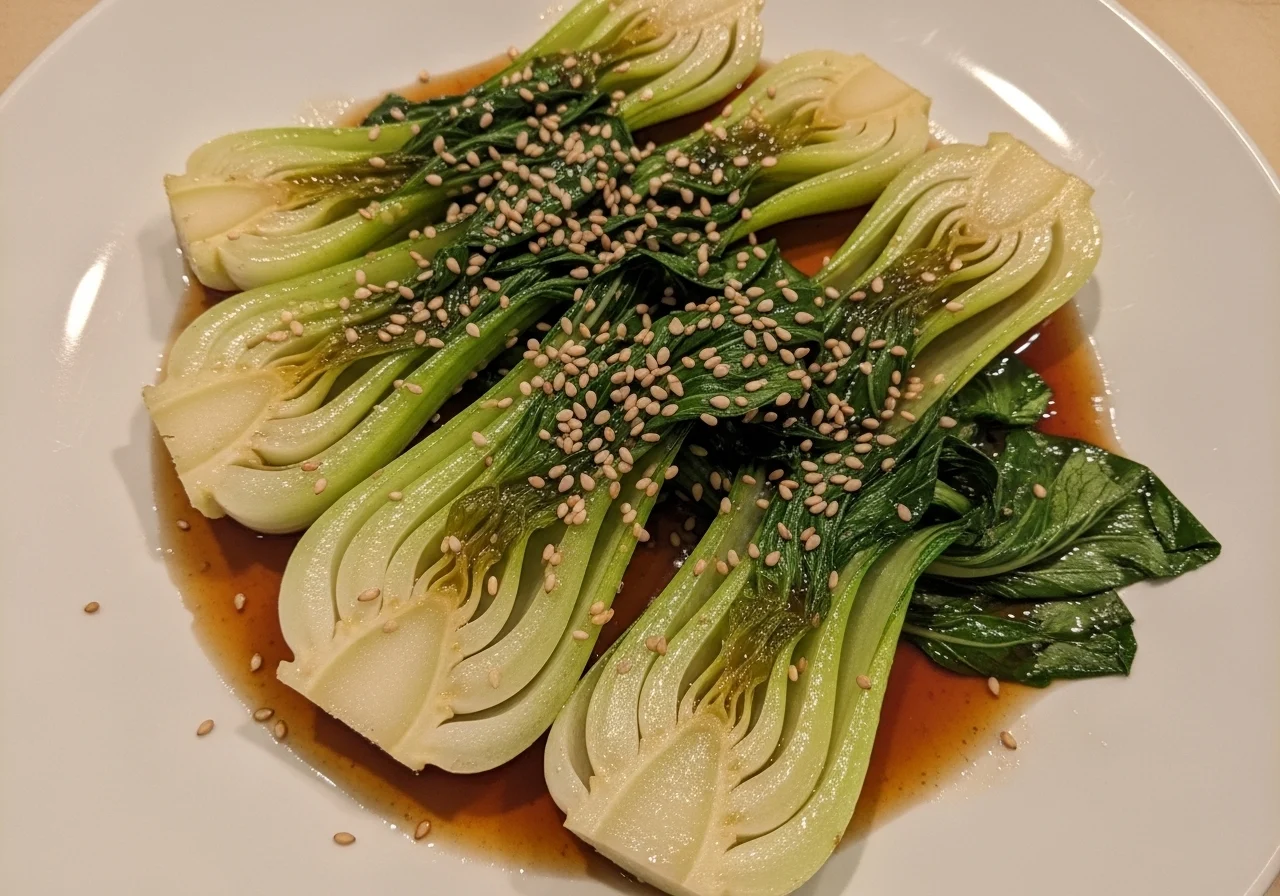
soy glazed bok choy
Ingredients
Method
- Rinse the baby bok choy thoroughly under cold water and pat dry.
- Slice each bok choy head in half lengthwise.
- Whisk together the soy sauce, sesame oil, honey, rice vinegar, and red pepper flakes in a small bowl.
- Heat the vegetable oil in a large skillet or wok over medium-high heat.
- Place the bok choy cut-side down in the hot pan and sear for 2-3 minutes until golden brown.
- Flip the bok choy and add the minced garlic and grated ginger to the pan, cooking for another minute.
- Pour the prepared glaze over the bok choy, tossing gently to coat and cook for 2-3 more minutes.
- Transfer to a serving platter and sprinkle with sesame seeds. Serve immediately.
Notes
Or browse by category:
As an Amazon Associate I earn from qualifying purchases.