Pesto Shrimp Pasta
|
Getting your Trinity Audio player ready...
|
Life with two active girls, 19 and 15, and a chef husband, Mateo, often feels like a beautiful, delicious whirlwind. There are evenings when we need dinner on the table fast, but we refuse to compromise on flavor or nourishment. One particularly busy Tuesday, after a long day of school, work, and extracurriculars, everyone was hungry.
Mateo, always with an eye for simple elegance, suggested we whip up our go-to Pesto Shrimp Pasta. The mere mention of it brought smiles. The girls knew it meant a vibrant, satisfying meal was just minutes away.
Mateo, despite being a professional chef, appreciates the beauty of quick, quality home cooking as much as I do. He often says, “Food is love, Evelyn, and it doesn’t always need to be complicated.” This Pesto Shrimp Pasta embodies that philosophy. It is a dish that comes together so quickly, yet tastes like you spent hours crafting it.
The aroma of garlic, fresh basil pesto, and perfectly cooked shrimp fills our kitchen, signaling that a little bit of culinary magic is about to happen. It is a dish that always brings us together, proving that sometimes the simplest ingredients create the most memorable meals. Our family loves this Pesto Shrimp Pasta, and I know your family will too.
Why You’ll Love This Pesto Shrimp Pasta Recipe
This Pesto Shrimp Pasta recipe is an absolute game-changer for weeknight dinners. First, it is incredibly fast. From start to finish, you can have a gourmet-tasting meal on the table in under 30 minutes.
That speed makes it perfect for those hectic evenings when time is a luxury you do not have. Second, the flavor profile is outstanding. The bright, herbaceous pesto perfectly complements the sweet, succulent shrimp.
A hint of lemon zest brightens everything, creating a dish that feels both comforting and sophisticated. This Pesto Shrimp Pasta is not just quick; it is deeply satisfying.
Moreover, it is a versatile meal. You can easily adapt it to what you have in your pantry or fridge. Need to add more vegetables?
Toss in some cherry tomatoes or spinach. Want to make it dairy-free? Use a dairy-free pesto.
This adaptability makes Pesto Shrimp Pasta a consistent winner in our home. It is also naturally nourishing. Shrimp provides lean protein, and pesto offers healthy fats and fresh greens.
Paired with whole-wheat pasta, this Pesto Shrimp Pasta becomes a balanced and wholesome meal option. My girls often ask for this dish by name, and Mateo, with his high culinary standards, always gives it his seal of approval. It truly is a simple pleasure that delivers big on taste and convenience.
Ingredients You’ll Need
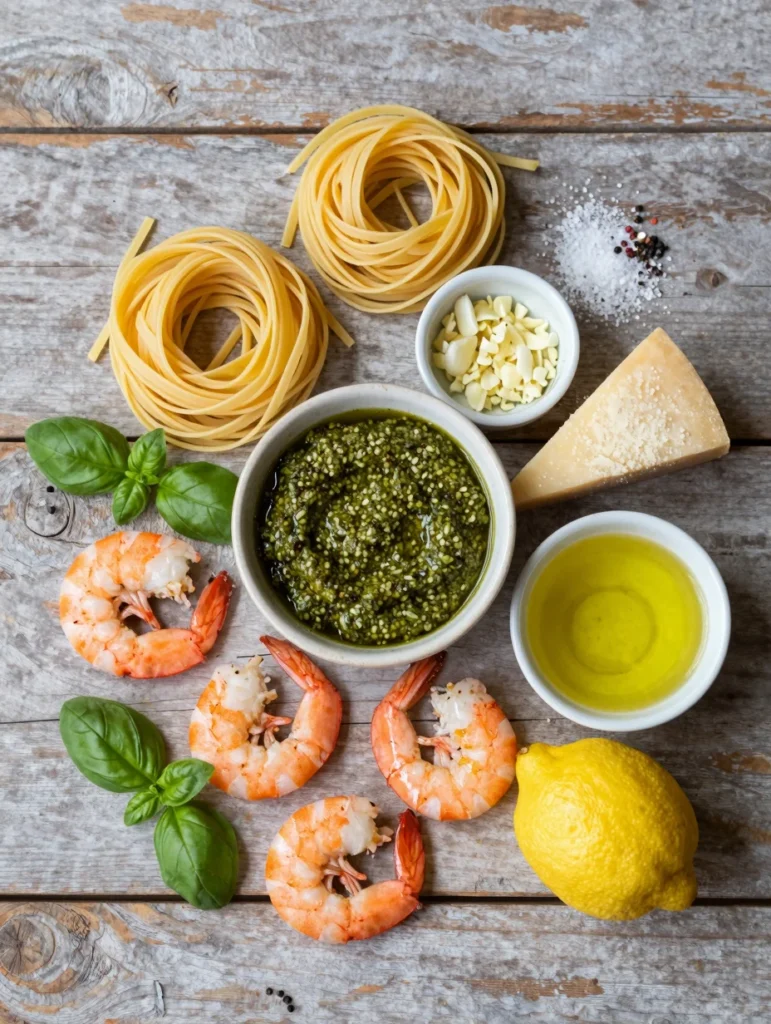
Crafting the perfect Pesto Shrimp Pasta starts with high-quality ingredients. Here is what you will gather for this delightful dish. Each component plays a crucial role in building the incredible flavors of this Pesto Shrimp Pasta.
| Ingredient | Quantity | Notes |
|---|---|---|
| Pasta | 1 pound | Linguine, spaghetti, or fettuccine work beautifully. |
| Shrimp | 1 pound | Large or jumbo, peeled and deveined, tails on or off. Fresh is best for this Pesto Shrimp Pasta. |
| Basil Pesto | 1 cup | Store-bought or homemade, your preference. |
| Garlic | 3-4 cloves | Minced, fresh garlic provides the best flavor. |
| Olive Oil | 2 tablespoons | Extra virgin, for sautéing and finishing. |
| Lemon | 1 (for zest and juice) | Fresh lemon brightens the entire Pesto Shrimp Pasta. |
| Parmesan Cheese | 1/2 cup | Grated, plus extra for serving. |
| Salt | To taste | Kosher or sea salt for seasoning pasta water and shrimp. |
| Black Pepper | To taste | Freshly ground is always superior. |
| Red Pepper Flakes | 1/4 teaspoon (optional) | For a subtle kick in your Pesto Shrimp Pasta. |
| Fresh Basil Leaves | For garnish (optional) | Adds a final touch of freshness. |
Substitutions & Variations
This Pesto Shrimp Pasta is wonderfully flexible, allowing you to customize it based on your preferences or what you have available. Do not hesitate to experiment. Making it your own is part of the fun of this Pesto Shrimp Pasta recipe.
- Pasta Alternatives: While linguine or spaghetti are classics for Pesto Shrimp Pasta, feel free to use penne, rotini, or even a gluten-free pasta. Whole wheat pasta also works well, adding extra fiber. Orzo pasta creates a different, but equally delicious, texture.
- Protein Swaps: Not a fan of shrimp, or out of it? Cooked chicken breast, crumbled Italian sausage, or even pan-seared scallops make excellent substitutions. For a vegetarian Pesto Pasta, omit the shrimp entirely and add white beans or chickpeas for protein.
- Pesto Power: Homemade pesto is always fantastic, but a good quality store-bought pesto saves significant time. You can also vary the type of pesto-sun-dried tomato pesto or even a kale pesto can offer a unique twist to your Pesto Shrimp Pasta. Just make sure the flavors complement the shrimp.
- Add More Veggies: Boost the nutrition and color of your Pesto Shrimp Pasta. Cherry tomatoes, halved or quartered, are a natural fit. Sautéed spinach, asparagus spears, or roasted bell peppers can also be tossed in with the pasta at the end.
- Creamy Version: For a richer, creamier Pesto Shrimp Pasta, stir in a quarter cup of heavy cream or a dollop of mascarpone cheese along with the pesto. This creates a more indulgent sauce.
- Nut-Free Pesto: If allergies are a concern, use a nut-free pesto or make your own with sunflower seeds instead of pine nuts. This ensures everyone can enjoy your delicious Pesto Shrimp Pasta.
- Spicy Kick: Increase the red pepper flakes or add a dash of hot sauce to the shrimp while cooking for a more fiery Pesto Shrimp Pasta experience.
- Herbs & Zest: Beyond basil, consider a sprinkle of fresh parsley or dill for a different aromatic note. Always include that fresh lemon zest and a squeeze of juice-it truly brightens every component of this Pesto Shrimp Pasta.
This Pesto Shrimp Pasta is wonderfully flexible, allowing you to customize it based on your preferences or what you have available. For a classic touch, consider making your own sauce with this Classic Basil Pesto Sauce.
Step-by-Step Instructions
Preparing this Pesto Shrimp Pasta is straightforward and quick. Follow these simple steps for a truly delicious meal. You will be amazed at how easily this incredible Pesto Shrimp Pasta comes together.
- Cook the Pasta: Bring a large pot of salted water to a rolling boil. Add your chosen pasta and cook according to package directions until al dente. Reserve about 1 cup of the starchy pasta water before draining. This reserved water is key to a silky sauce for your Pesto Shrimp Pasta.
- Prepare the Shrimp: While the pasta cooks, pat the peeled and deveined shrimp dry with paper towels. Season them generously with salt, freshly ground black pepper, and a pinch of red pepper flakes, if using. Make sure the shrimp are evenly coated with seasoning for maximum flavor in your Pesto Shrimp Pasta.
- Sauté the Aromatics: Heat 1 tablespoon of olive oil in a large skillet or non-stick pan over medium-high heat. Add the minced garlic to the hot oil. Sauté for about 30 seconds, just until fragrant. Be careful not to burn the garlic, as this will impart a bitter taste to your Pesto Shrimp Pasta.
- Cook the Shrimp: Add the seasoned shrimp to the skillet with the garlic. Cook for 1-2 minutes per side, or until the shrimp turn pink and opaque. Do not overcrowd the pan; cook in batches if necessary. Overcooked shrimp become tough, so watch them carefully for your Pesto Shrimp Pasta. Remove the cooked shrimp from the pan and set aside.
- Combine Ingredients: Add the drained pasta to the skillet with any remaining garlic oil. Reduce the heat to low. Stir in the basil pesto, lemon zest, and half of the grated Parmesan cheese. Toss everything to coat the pasta evenly. This step brings the vibrant flavors into your Pesto Shrimp Pasta.
- Adjust Sauce Consistency: Gradually add the reserved pasta water, 1/4 cup at a time, stirring constantly. Continue adding until the sauce reaches your desired consistency-creamy and clings to the pasta, but not watery. This starchy water helps emulsify the pesto into a luxurious sauce for your Pesto Shrimp Pasta.
- Add Shrimp Back: Gently fold the cooked shrimp back into the pasta. Stir just to combine and heat through for about 30 seconds. A squeeze of fresh lemon juice at this stage enhances the brightness of your Pesto Shrimp Pasta.
- Serve: Taste and adjust seasoning as needed. Serve immediately. Garnish each plate of Pesto Shrimp Pasta with extra Parmesan cheese, fresh basil leaves, and another sprinkle of lemon zest if desired. Enjoy your homemade Pesto Shrimp Pasta!
Pro Tips for Success
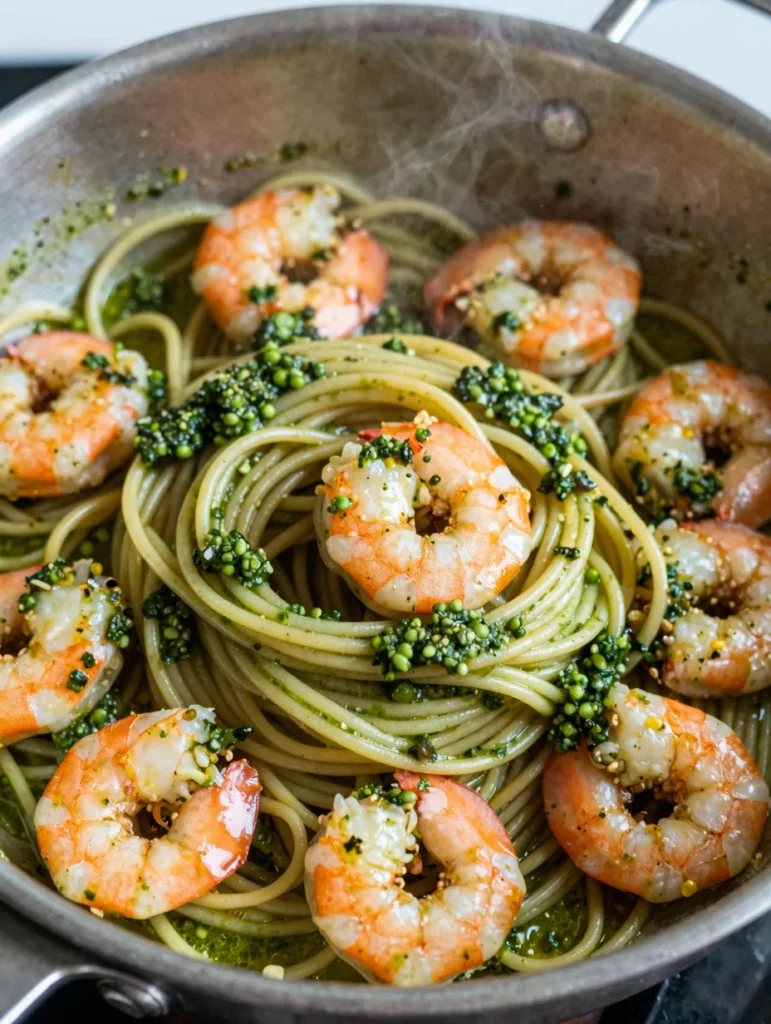
Even simple recipes benefit from a few expert touches. Mateo, with his chef background, always shares these pearls of wisdom, ensuring our Pesto Shrimp Pasta turns out perfectly every time. These tips guarantee your Pesto Shrimp Pasta will be restaurant-quality.
- Perfectly Cooked Shrimp: Shrimp cook very quickly. Overcooked shrimp become rubbery and tough. Watch them closely; they turn pink and opaque when done. Remove them from the heat immediately. They will continue to cook slightly from residual heat. This is crucial for tender, delicious shrimp in your Pesto Shrimp Pasta.
- Season Pasta Water Generously: Always season your pasta water as if it were seawater. This is your first opportunity to flavor the pasta itself. Well-salted pasta enhances the overall taste of your Pesto Shrimp Pasta significantly.
- Reserve Pasta Water: Do not skip reserving some pasta water! The starch in this water helps to emulsify the pesto sauce, making it incredibly creamy and ensuring it clings beautifully to the pasta. It is the secret ingredient for a truly luscious Pesto Shrimp Pasta.
- Warm the Pesto: While many think of pesto as a cold sauce, gently warming it with the pasta helps release its full aromatic potential. However, avoid high heat, as this can dull the fresh basil flavor. Low heat, mixed with the warm pasta and a touch of pasta water, is ideal for your Pesto Shrimp Pasta.
- Fresh Lemon is Key: A squeeze of fresh lemon juice and a sprinkle of zest at the end makes a remarkable difference. It brightens all the flavors, cutting through the richness of the pesto and complementing the sweetness of the shrimp. It is a non-negotiable for a vibrant Pesto Shrimp Pasta.
- Freshly Grated Parmesan: Skip the pre-grated cheese if possible. Freshly grated Parmesan melts better and offers a superior, nuttier flavor that elevates the entire Pesto Shrimp Pasta dish.
- Do Not Overcrowd the Pan: When cooking shrimp, ensure they have enough space in the skillet. Overcrowding can lower the pan’s temperature, causing the shrimp to steam rather than sear, leading to a less desirable texture. Cook in batches if necessary for your Pesto Shrimp Pasta.
- Taste and Adjust: Always taste your Pesto Shrimp Pasta before serving. Adjust salt, pepper, or lemon juice as needed. A final sprinkle of red pepper flakes can also add a pleasant warmth.
Even simple recipes benefit from a few expert touches. To ensure your Pesto Shrimp Pasta turns out perfectly every time, check out these tips from Mateo in our Sourdough Egg and Cheese Sandwich article.
Storage & Reheating Tips
While Pesto Shrimp Pasta is best enjoyed fresh, sometimes you have leftovers, and knowing how to store and reheat them properly ensures they remain delicious. Our family often makes a little extra, knowing we will savor it again.
- Cool Promptly: Allow the Pesto Shrimp Pasta to cool to room temperature quickly, within an hour. This prevents bacterial growth.
- Airtight Container: Transfer the cooled Pesto Shrimp Pasta to an airtight container. This keeps it fresh and prevents it from absorbing other refrigerator odors.
- Refrigeration: Store the Pesto Shrimp Pasta in the refrigerator for up to 2-3 days. Note that the pasta may absorb more of the sauce over time, and the texture of the shrimp can change slightly.
- Reheating on the Stovetop (Recommended): For best results, reheat your Pesto Shrimp Pasta on the stovetop. Place the desired portion in a skillet over medium-low heat. Add a splash of water or chicken broth, about 1-2 tablespoons, to help loosen the sauce and prevent the pasta from drying out. Stir gently until heated through. This method helps maintain the texture of the pasta and prevents the shrimp from becoming rubbery.
- Reheating in the Microwave: While not ideal for preserving shrimp texture, you can microwave Pesto Shrimp Pasta. Place your portion in a microwave-safe dish. Add a tablespoon of water or broth and cover loosely. Heat in 30-second intervals, stirring in between, until warm. Be careful not to overheat the shrimp.
- Freezing: Freezing Pesto Shrimp Pasta is generally not recommended, especially with shrimp. The texture of both the pasta and the shrimp can become unappealingly soft or rubbery upon thawing and reheating. It is much better to enjoy this Pesto Shrimp Pasta within a few days of preparation.
- Reviving Flavors: If your reheated Pesto Shrimp Pasta seems a little lackluster, a fresh squeeze of lemon juice, a drizzle of olive oil, and a sprinkle of fresh Parmesan cheese can work wonders to revive its flavors.
What to Serve With This Pesto Shrimp Pasta Recipe
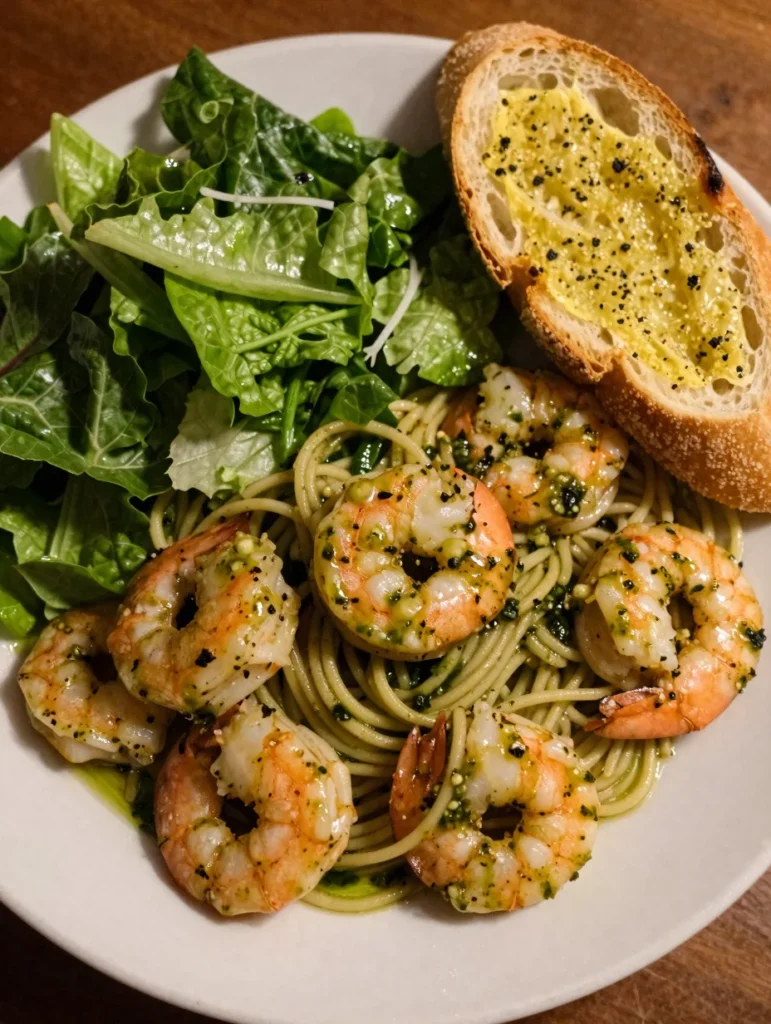
This Pesto Shrimp Pasta is a complete meal on its own, but pairing it with a simple side elevates the dining experience. Mateo always insists on a little something extra to round out our Pesto Shrimp Pasta nights.
- Crisp Green Salad: A simple mixed green salad with a light vinaigrette is the perfect counterpoint to the rich Pesto Shrimp Pasta. The fresh, crisp greens offer a refreshing contrast.
- Garlic Bread or Crusty Baguette: No pasta dish is complete without something to sop up every last bit of that delicious pesto sauce. Garlic bread, focaccia, or a warm, crusty baguette are ideal companions for Pesto Shrimp Pasta.
- Roasted Asparagus: Roasting asparagus with a little olive oil, salt, and pepper brings out its natural sweetness. Its slight bitterness also complements the savory flavors of the Pesto Shrimp Pasta.
- Steamed Green Beans: Lightly steamed green beans, perhaps tossed with a hint of lemon and garlic, add a simple, healthy vegetable component to your Pesto Shrimp Pasta meal.
- Caprese Skewers: For a fresh and elegant side, Caprese skewers (cherry tomatoes, mozzarella balls, and fresh basil leaves, drizzled with balsamic glaze) echo the basil notes in the Pesto Shrimp Pasta.
- Grilled Vegetables: A medley of grilled zucchini, bell peppers, and red onion adds smoky depth and vibrant color alongside your Pesto Shrimp Pasta.
- White Wine: For the adults, a crisp Sauvignon Blanc or a light Pinot Grigio pairs beautifully with the flavors of Pesto Shrimp Pasta, enhancing the dining experience.
This Pesto Shrimp Pasta is a complete meal on its own, but pairing it with a simple side elevates the dining experience. For a refreshing complement, try a Strawberry Basil Smoothie alongside your pasta.
FAQs
Can I use frozen shrimp for Pesto Shrimp Pasta?
Absolutely! Frozen shrimp work perfectly for Pesto Shrimp Pasta. Just make sure to thaw them completely before cooking.
You can thaw them overnight in the refrigerator or by placing them in a bowl of cold water for about 15-20 minutes. Pat them very dry with paper towels before seasoning and cooking to ensure a good sear and prevent them from becoming watery in your Pesto Shrimp Pasta.
What kind of pasta is best for Pesto Shrimp Pasta?
Long, thin pasta shapes like linguine, spaghetti, or fettuccine are traditional and work wonderfully because they allow the pesto sauce to cling beautifully. However, medium-sized shapes like penne, rotini, or even farfalle (bow-tie pasta) are also excellent choices, especially if you prefer a chunkier bite. The key is to choose a pasta that effectively carries the delicious pesto sauce in your Pesto Shrimp Pasta.
Can I make pesto ahead of time for this Pesto Shrimp Pasta recipe?
Yes, absolutely! Making pesto ahead of time is a fantastic way to save time on busy weeknights. You can prepare homemade pesto several days in advance and store it in an airtight container in the refrigerator.
Drizzle a thin layer of olive oil on top before sealing to prevent oxidation and keep its vibrant green color. This makes assembling your Pesto Shrimp Pasta even faster.
How do I prevent shrimp from becoming rubbery in Pesto Shrimp Pasta?
The key to tender shrimp is not to overcook them. Shrimp cook very quickly, usually within 1-2 minutes per side, depending on their size. They are done when they turn pink and opaque.
As soon as you see this color change, remove them from the heat. They will continue to cook slightly from residual heat, so err on the side of slightly undercooking rather than overcooking for your Pesto Shrimp Pasta.
Is Pesto Shrimp Pasta healthy?
Yes, Pesto Shrimp Pasta can be a very healthy and nourishing meal. Shrimp is a lean source of protein and provides essential nutrients like selenium and B vitamins. Pesto offers healthy fats from olive oil and nuts, plus vitamins from fresh basil.
Pairing it with whole wheat pasta increases fiber content, making it a well-balanced meal. Portion control is key, but overall, it is a wholesome choice for your dinner table.
Pesto Shrimp Pasta is a delightful dish that combines the vibrant flavors of basil pesto with succulent shrimp and pasta. This quick and easy recipe is perfect for busy weeknights, showcasing how simple ingredients can create a memorable meal, much like the art of pasta making.
Nutrition Information (per serving)
Please note, these values are estimates and can vary based on specific ingredients, brands, and portion sizes used in your Pesto Shrimp Pasta. This estimation is based on approximately 4 servings for the entire recipe.
| Nutrient | Amount |
|---|---|
| Calories | 550-650 kcal |
| Total Fat | 25-35g |
| Saturated Fat | 5-8g |
| Cholesterol | 200-250mg |
| Sodium | 600-800mg |
| Total Carbohydrates | 50-60g |
| Dietary Fiber | 4-6g |
| Total Sugars | 3-5g |
| Protein | 35-45g |
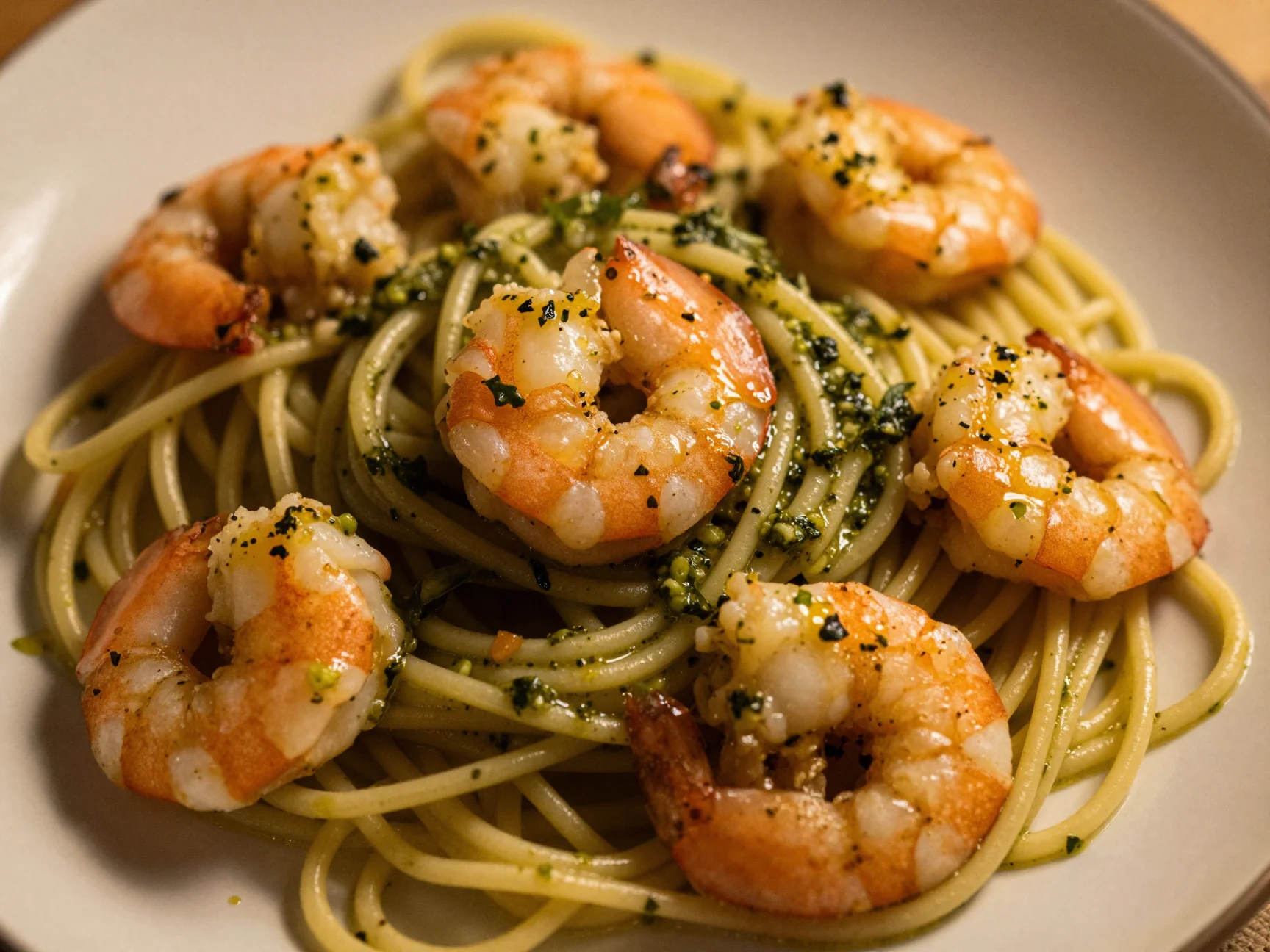
Pesto Shrimp Pasta
Ingredients
Method
- Bring a large pot of salted water to a rolling boil. Add pasta and cook according to package directions until al dente. Reserve about 1 cup of pasta water before draining.
- While pasta cooks, pat shrimp dry and season with salt, pepper, and red pepper flakes.
- Heat olive oil in a skillet over medium-high heat. Add minced garlic and sauté for about 30 seconds until fragrant.
- Add seasoned shrimp to the skillet and cook for 1-2 minutes per side until pink and opaque. Remove shrimp and set aside.
- Add drained pasta to the skillet with remaining garlic oil. Reduce heat to low and stir in basil pesto, lemon zest, and half of the Parmesan cheese.
- Gradually add reserved pasta water until the sauce reaches desired consistency.
- Fold cooked shrimp back into the pasta and stir to combine. Squeeze fresh lemon juice over the dish.
- Taste and adjust seasoning. Serve immediately, garnished with extra Parmesan and fresh basil.